

The padel club business model: revenue, costs and courts
How a successful padel club is organised: where the revenue comes from, what the main costs are and how to size and mix courts to keep them full.

Business model
How a club that works is organised
A padel club sells hours on court, but it earns loyalty with everything around them. This is how the business fits together, from revenue streams to the right mix of courts.
The logic of the business: fill hours and build loyalty
The padel club business model rests on a simple idea: each court offers a limited number of hours a day, and the club does well when it fills them and players keep coming back. The courts are the core product, but around them you build a range of services that spreads revenue and makes the club less dependent on peak hours. If you are still assessing whether the project suits your area, start with our analysis of whether a padel court is profitable.
Revenue streams
- Court hire: the core income, with different rates for peak and off-peak hours.
- Memberships and passes: recurring revenue and loyalty from regular players.
- Coaching and academy: adult groups, junior programmes and private lessons, ideal for filling quieter hours.
- Leagues, tournaments and social mix-ins: they build community, attract newcomers and fill weekends.
- Corporate events and celebrations: group bookings with added services.
- Bar, pro shop and equipment hire: they raise spend per visit and keep people at the club longer.
- Sponsorship and visibility: local brands on glass, banners or social media; courts can be customised with colours and logos.
The cost structure
Fixed costs include the land or premises, front-desk staff and coaches, insurance and management software. Variable costs depend on use: energy, cleaning, maintenance and marketing. In the medium term come replacements, such as new turf or nets.
This is where court quality has a direct impact. A hot-dip galvanised steel frame with C5 treatment and powder coating, 12 mm tempered glass and premium turf reduce repairs and court closures. High-efficiency 240 W LED lighting helps keep consumption down in the evening hours, which are usually the busiest.
Club formats
- Urban indoor club: plays all year regardless of the weather; it needs a building with 7 to 8 m of clear height.
- Outdoor club: lighter groundworks and a great open-air experience; very common in mild climates.
- Club within a wider venue: hotels, resorts, multi-sport centres or residential developments adding padel to their offer.
How to size and combine the courts
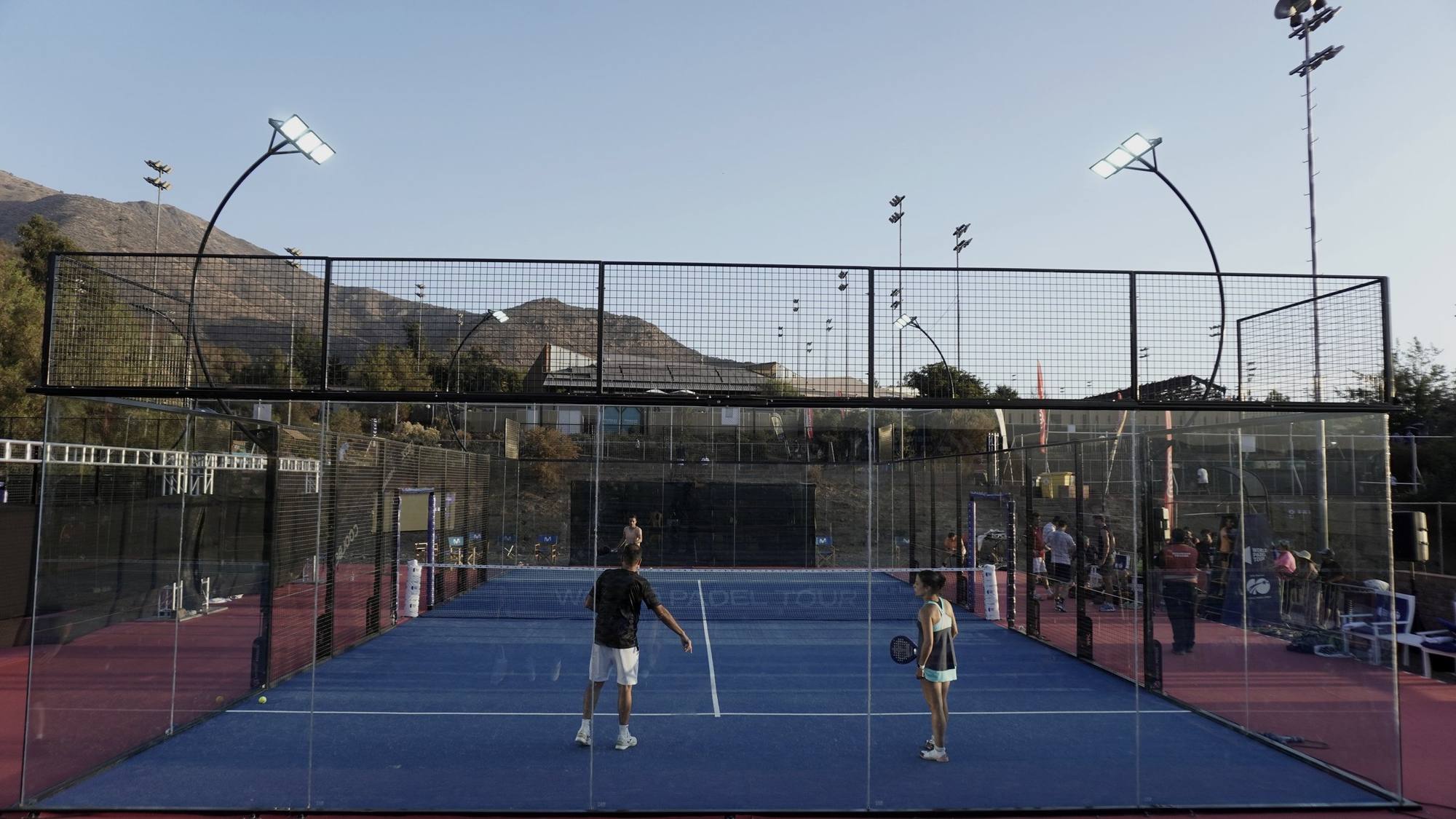
The number of courts defines the club's capacity: with several, you can run leagues, tournaments and coaching at the same time without blocking public bookings. The mix of models matters too. A Full Vision show court, the model chosen for Premier Padel 2024–25, gives the club a showcase for tournaments and exhibitions. Panoramic or Elite Pro work very well for day-to-day rotation, and a Single court is perfect for private lessons and training in a small space. If the site allows, leave room to expand in a second phase.
Digital management and player experience
Online booking and payment, automated access control and lighting linked to each booking let you run the club with a small team and open for longer. But technology does not replace community: rankings, internal leagues, social events and well-kept courts are what turn an occasional player into a member. Once your format is clear, ask us for a quote and we will help you define the court configuration that best fits your model.
Frequently asked questions
-
How does a padel club make money?
Mainly through hourly court hire, complemented by memberships, coaching, leagues and tournaments, corporate events, a bar, a shop and sponsorship. Diversifying reduces dependence on peak hours. -
What are the main costs of running a padel club?
Land or premises, staff, insurance, management software, energy, cleaning, maintenance and marketing. In the medium term you should also budget for replacements such as new turf or nets. -
Which court works best as a club's show court?
A panoramic court such as the Full Vision, chosen for Premier Padel 2024–25, offers the best visibility for tournaments, exhibitions and live streaming, and lifts the club's image. -
Can a padel club be run with automated management?
Yes. Online booking and payment, access control and lights switched on with each booking let you operate with fewer staff and extend opening hours.

Let's design your club's courts
Tell us about your club model and we will prepare a quote with the ideal court configuration.
Related articles
Guides
How to choose your padel court model: Full Vision, Panoramic and Elite Pro
We compare our padel court ranges so you can choose the right one for your project's use, audience and design.
Business
Is a padel court profitable? How to assess the business case
The sport's popularity alone does not make a padel court profitable. Location, occupancy, running costs and build quality decide the business case.
Guides
Padel court cost: the factors that determine the price
Why there is no single price for a padel court, which factors really move the figure and how to request quotes you can compare like for like.


