

Padel court glass: why 12 mm tempered glass makes the difference
Glass shapes the bounce, safety and visibility of a padel court. Here is what tempering does, why 12 mm matters and how to look after the panels.

Glass
The hardest-working wall on court
On a padel court, glass is not decoration. It is a playing surface that takes thousands of impacts, so its thickness, tempering and fixing matter as much as the frame.
What tempered glass is and why padel requires it
Tempered glass is glass that, once cut and drilled, is heated close to its softening point and then rapidly cooled with air. That thermal shock leaves the surface in compression and the core in tension, making it several times stronger against impact and bending than ordinary glass.
The other major advantage is how it behaves if it ever breaks: instead of splitting into large, sharp shards, it crumbles into small, blunt granules. In a sport where players bounce off, lean on and occasionally collide with the walls, that is a safety matter, not an aesthetic one.
One practical point: tempered glass cannot be cut or drilled after tempering. Every hole for the fixings is made beforehand, which is why the steel frame must be manufactured with the same precision. We cover this in how padel courts are made.
Why 12 mm is the benchmark thickness
Our courts use 12 mm certified tempered safety glass. The thickness is not arbitrary:
- Predictable bounce. A rigid panel returns the ball evenly across its whole surface; thinner glass flexes and produces irregular rebounds.
- Built for heavy use. A busy club may have a court booked for most of the day, every day. 12 mm glass withstands that constant repetition of impacts.
- Less vibration and noise. A thicker panel transmits less vibration to the frame and sounds more solid, something players notice immediately.
Fixing matters as much as the glass
Good glass badly installed is a problem. Panels must sit perfectly flush with one another so the ball does not change direction as it moves from one to the next. The fixing system also has to spread the load and avoid direct contact between glass and steel: concentrated stress points are the most common cause of unexpected breakage.
That is why we fix our panels with stainless steel hardware onto a laser-cut, robot-welded frame, so every hole meets its anchor without stressing the glass.
Visibility: glass is designed for spectators too
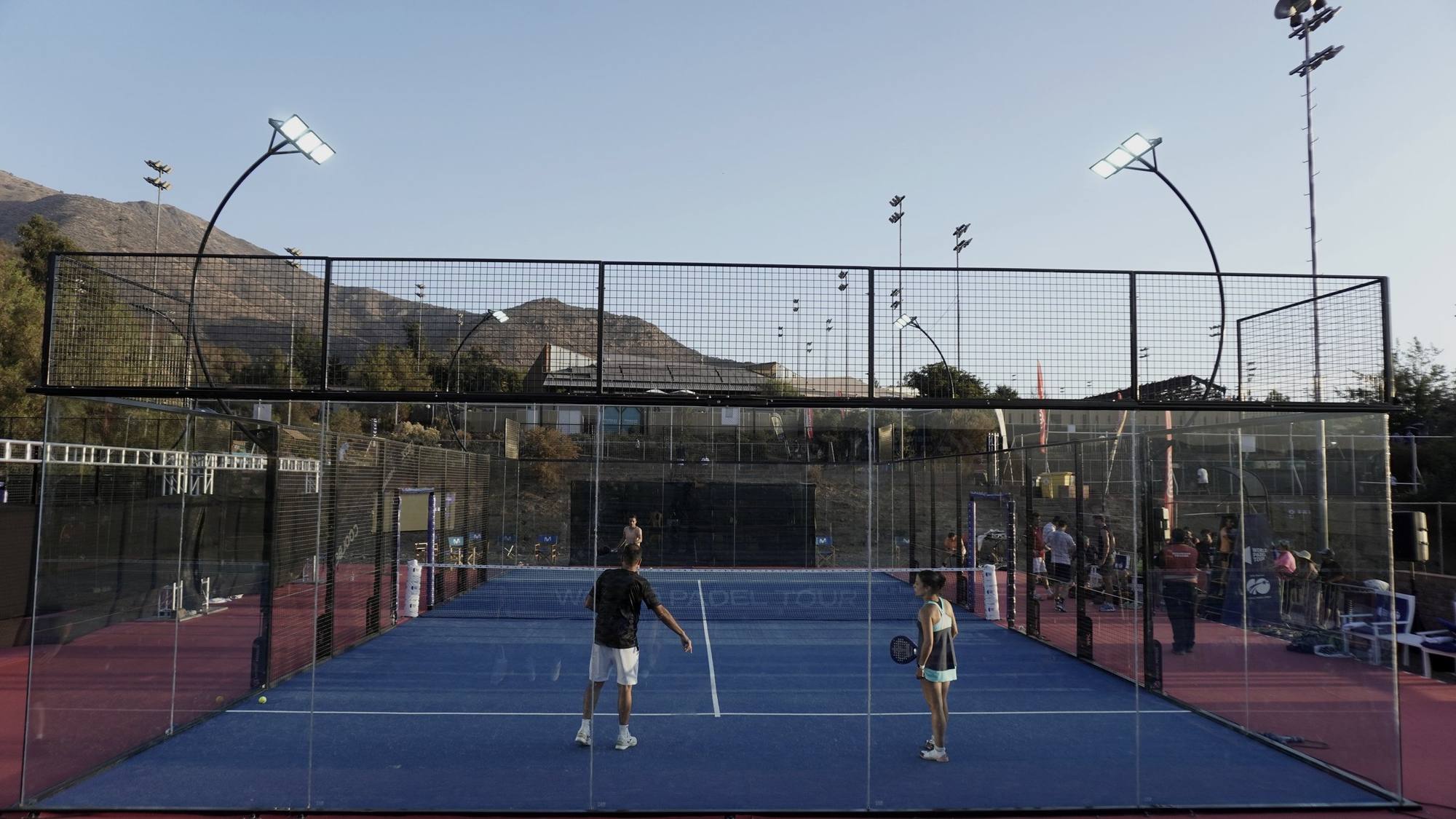
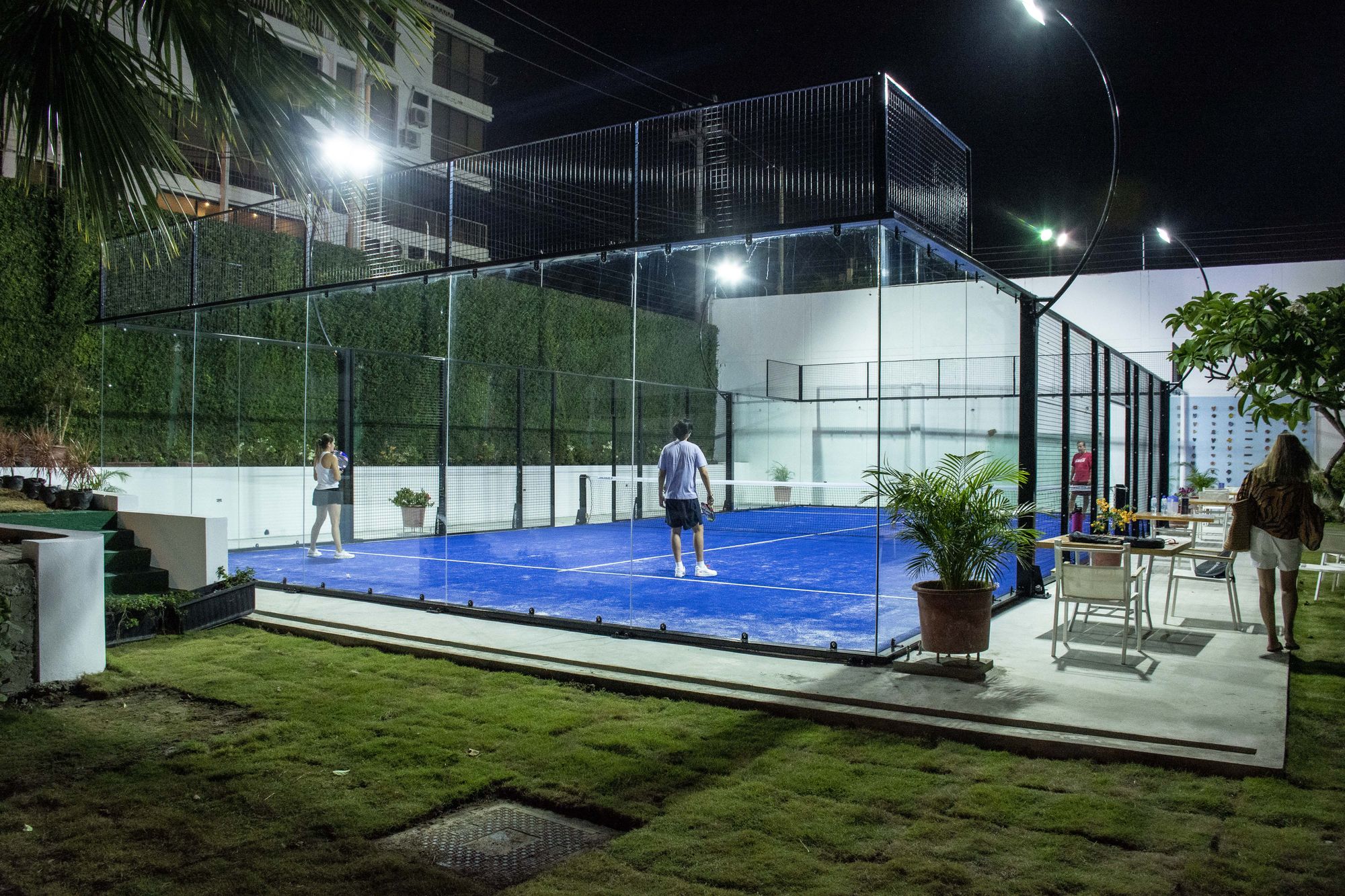
Glass is what turns a court into a small arena. On panoramic models, posts are kept to a minimum so players, spectators and cameras can follow the game without interruption. That is the idea behind the Full Vision court, chosen by professional tours such as Premier Padel, and also behind our Panoramic. If your project includes tournaments, seating or live streaming, visibility should weigh heavily in your choice of model.
How to look after your court's glass
Tempered glass needs little care, but not none:
- Clean it with water, a neutral detergent and a soft cloth or rubber squeegee; avoid abrasive products or scourers that could scratch the surface.
- Check the edges regularly: a chipped edge is a weak point and that panel should be replaced.
- Check that the fixings are tight, especially on outdoor courts exposed to temperature changes and wind.
If your court is a few years old, we can inspect it even if it was built by another manufacturer, including glass replacement. Find out more in our padel court maintenance guide.
Frequently asked questions
-
How thick should padel court glass be?
The standard for a quality padel court is 12 mm tempered safety glass. That thickness gives an even bounce, withstands heavy use and reduces vibration. -
Is padel court glass dangerous if it breaks?
Tempered glass is designed to minimise risk: if it breaks, it crumbles into small, blunt granules rather than sharp shards. Correct fixing and regular edge checks also reduce the chance of breakage. -
Can a broken padel court glass panel be replaced?
Yes. Panels are replaced individually, and Padel Courts Master also provides this service on courts made by other manufacturers. -
How do you clean padel court glass?
Use water, a neutral detergent and a soft cloth or rubber squeegee. Avoid any abrasive product that could scratch the surface.

Choose the right glass and model
We will advise you on the model that best suits your club or project and send you a tailored quote.
Related articles
Guides
How to choose your padel court model: Full Vision, Panoramic and Elite Pro
We compare our padel court ranges so you can choose the right one for your project's use, audience and design.
Business
Is a padel court profitable? How to assess the business case
The sport's popularity alone does not make a padel court profitable. Location, occupancy, running costs and build quality decide the business case.
Guides
Padel court cost: the factors that determine the price
Why there is no single price for a padel court, which factors really move the figure and how to request quotes you can compare like for like.


