

How a premium padel court is made, from steel to first serve
From raw steel profile to FIP-approved court: we walk through every manufacturing stage and the details that separate a premium court from one that ages badly.

Manufacturing
Quality is decided on the factory floor
You cannot judge a padel court from a brochure photo. Its real quality is decided in the factory, and it shows years later in how the court plays and how well it has aged.
One manufacturer, one point of accountability
Two padel courts can look identical in a photo and behave very differently after a few seasons. The difference rarely lies in the visible design. It lies in how each part was made: the accuracy of the cut, the consistency of the welds and the treatment that protects the steel.
At Padel Courts Master we are a direct manufacturer with our own factory. We design, manufacture, install and maintain every court ourselves, so each stage described below happens under one roof, with no middlemen diluting responsibility when something needs answering for.
Engineering and CNC laser cutting
It all starts in our engineering office. Every model, whether Full Vision, Panoramic, Elite Pro or Single, has detailed part drawings that define profiles, wall thicknesses, drill holes and anchor points. Those drawings are followed to the millimetre, because FIP approval and the exact fit of the glass panels depend on them, and tempered glass cannot be adjusted once it has been toughened.
Steel profiles are cut on CNC and laser machines. Compared with manual cutting, a laser leaves clean edges and repeats exactly the same part every time. On site, that means frames that fit together without forcing, holes that line up with the fixings and an installation with no improvisation.
Robotic MIG welding: identical joints on every frame
Welding is where a workshop and a factory part ways. Our robotic MIG welding arms lay every bead at the same speed, temperature and penetration. The result is a frame with no hidden weak points, built to absorb ball impacts, players hitting the mesh and the wind loads an outdoor court faces season after season.
A consistent weld also helps the next stages: an even surface galvanises and coats better, leaving no pores where corrosion could take hold.
Double protection: hot-dip galvanising and oven-cured paint
Once welded, the parts are dipped in molten zinc. Hot-dip galvanising coats the steel inside and out and, combined with our C5 anti-corrosion treatment, prepares the frame for humid or coastal climates. We explain it in depth in our article on hot-dip galvanised steel for padel courts.
On top of the zinc we apply oven-cured powder coating, which gives the final colour and adds a second barrier against UV and abrasion.
Glass, mesh and turf: the playing components
The frame is completed with everything players see and touch:
- 12 mm certified tempered safety glass, fixed with stainless steel hardware.
- Anti-injury mesh with a 4 mm wire and no sharp ends.
- Premium MONDO artificial grass, 12 mm textured monofilament at 9,600 dtex, in a choice of colours.
- High-efficiency 240 W LED lighting and a competition net.
Each component has its own quality criteria; we review them one by one in our guide to padel court materials.
Quality control, shipping and installation
Before leaving the factory, every part is checked for dimensions, finish and condition, then labelled and packed to travel safely. Meanwhile, we send you the concrete base and ground specifications so your contractor can prepare the slab: the groundworks are theirs, and we take care of everything else.
Once the base is ready, our crew delivers and installs the court, adjusts tensions and anchors and hands it over ready to play. Every court is FIP-approved, comes with a 5-year warranty and is backed by the experience of more than 1,500 courts installed in 18 countries. See how it all comes together in our factory.
Frequently asked questions
-
How is a padel court made?
Steel profiles are CNC and laser cut, welded by MIG robots, hot-dip galvanised and finished with oven-cured powder coating. The 12 mm tempered glass, anti-injury mesh, artificial grass and lighting are then added, and the court is installed on a prepared concrete base. -
What makes a premium padel court different from a budget one?
Mainly manufacturing precision and steel protection: consistent robotic welding, full hot-dip galvanising plus oven-cured paint, and certified 12 mm tempered glass. These differences are invisible on day one but obvious after years of use. -
Who builds the concrete base for a padel court?
The client's contractor builds it, following the base and ground specifications supplied by Padel Courts Master. We manufacture, deliver, install and provide after-sales service. -
What warranty does a Padel Courts Master court have?
All our courts are approved by the International Padel Federation (FIP) and come with a 5-year warranty.

Let's talk about your court
Tell us about your project and we will prepare a quote with the model and finishes that suit it best.
Related articles
Guides
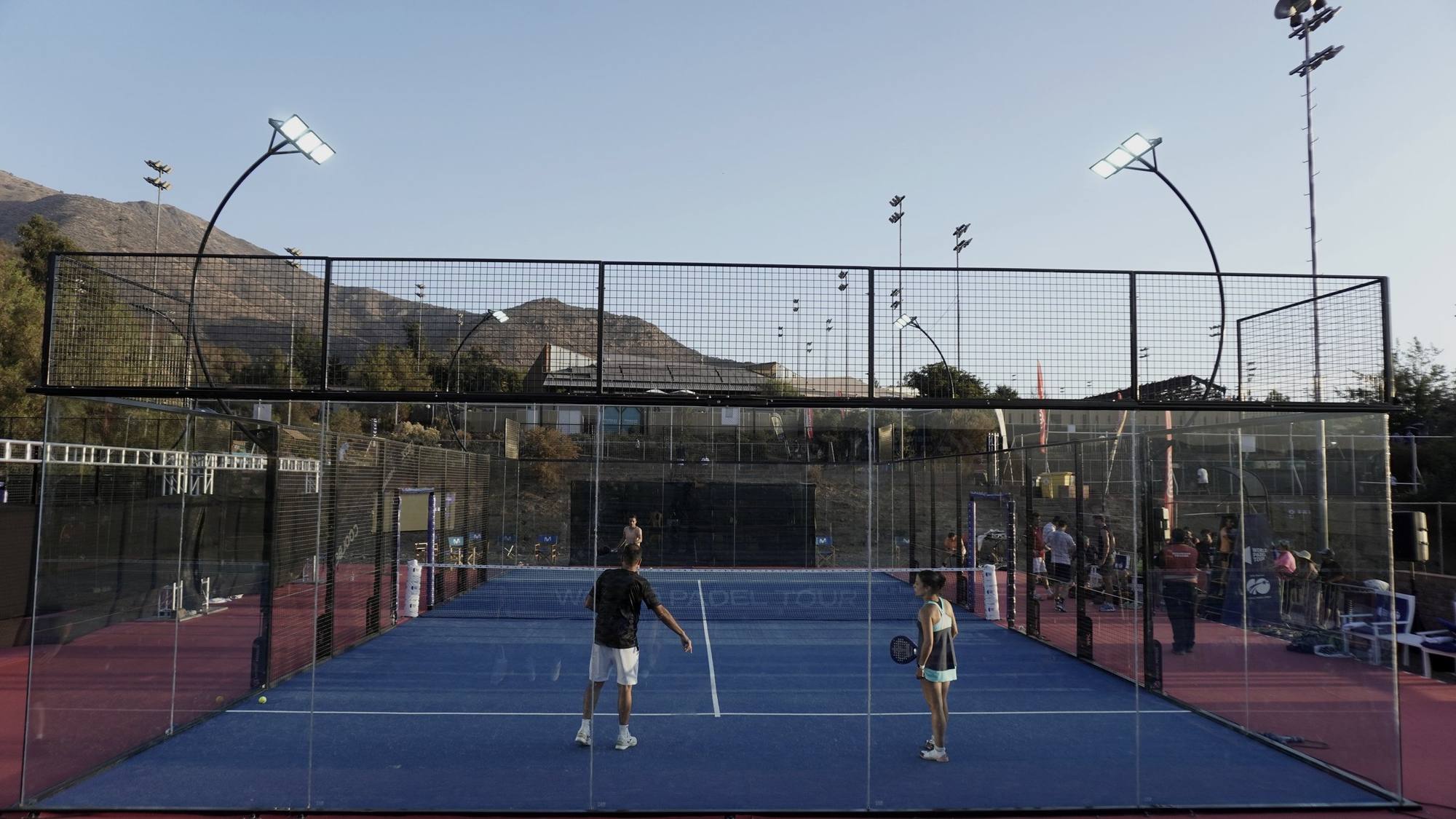
How to choose your padel court model: Full Vision, Panoramic and Elite Pro
We compare our padel court ranges so you can choose the right one for your project's use, audience and design.
Business
Is a padel court profitable? How to assess the business case
The sport's popularity alone does not make a padel court profitable. Location, occupancy, running costs and build quality decide the business case.
Guides
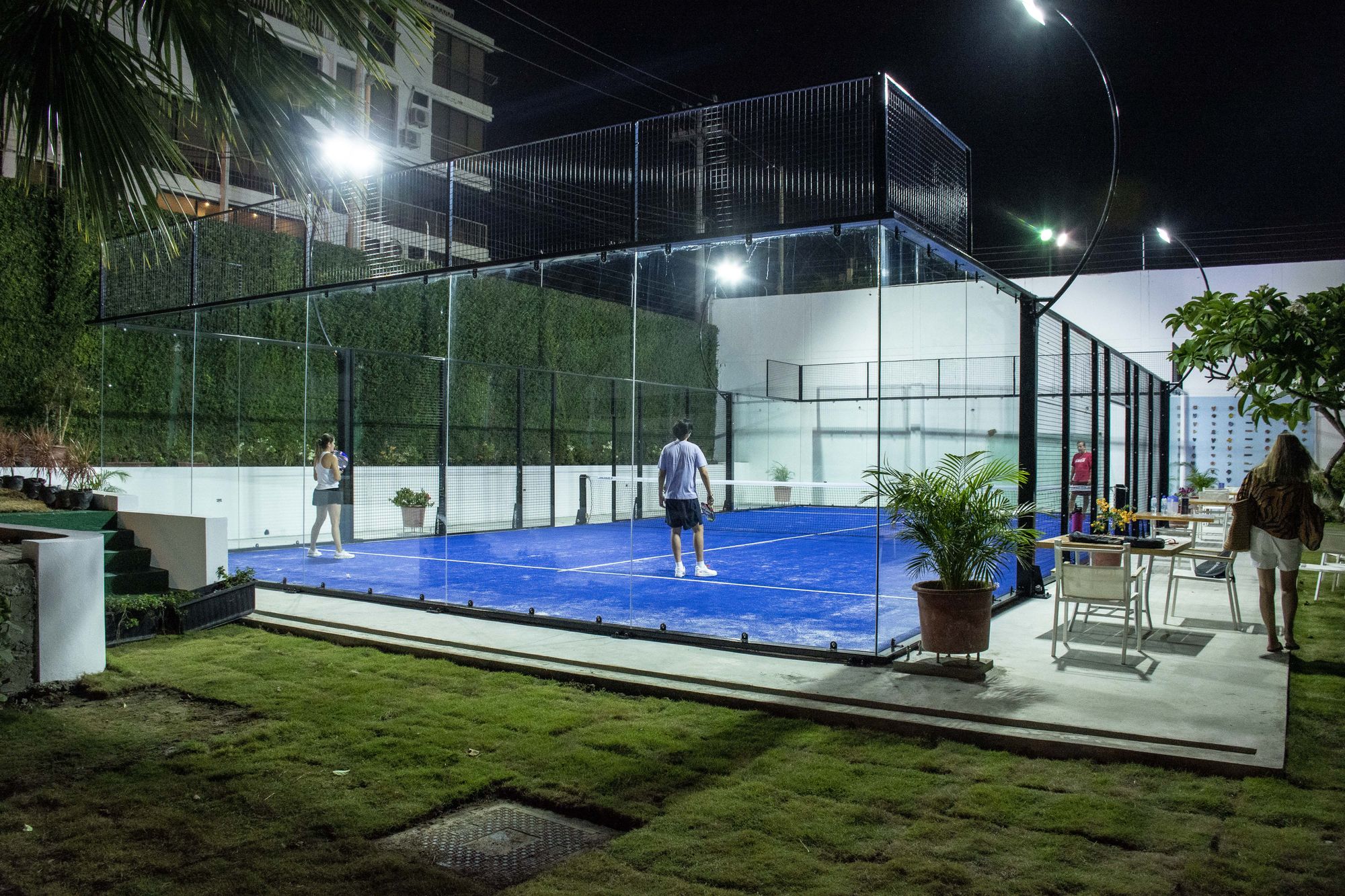
Padel court cost: the factors that determine the price
Why there is no single price for a padel court, which factors really move the figure and how to request quotes you can compare like for like.


