
Padel court materials: a guide to judging build quality
What a padel court is made of, which specifications to ask for and how to compare materials across quotes instead of relying on a photo.

Materials
What to look for on a spec sheet
A padel court brings together half a dozen very different materials, and each one ages in its own way. Knowing what to ask for is the best way to compare offers properly.
Why materials decide how long a court lasts
A padel court spends years outdoors or under a roof with almost constant use: sun, rain, humidity, ball impacts and thousands of footsteps on the turf. If a single component fails early, the whole court loses value, because nobody wants to book a court with worn grass or loose mesh. That is why it pays to check materials one by one, not just the overall look.
Frame: hot-dip galvanised and powder-coated steel
The frame is the court's skeleton and the most expensive part to repair if it deteriorates. What to ask for:
- Hot-dip galvanised steel, dipped after fabrication, not simply painted or made from pre-galvanised tube.
- Anti-corrosion protection suited to the environment; ours is rated C5, designed for coastal or very humid conditions.
- Oven-cured powder coating as the finish.
If you want to understand why hot-dip galvanising makes the difference, read our article on galvanised steel for padel courts.
Enclosure: tempered glass and anti-injury mesh
The walls are part of the playing surface and the main safety element. Check that the glass is certified 12 mm tempered safety glass fixed with stainless steel hardware. Our guide to padel court glass explains why that thickness matters.
With the mesh, look at two things: the wire gauge and how the ends are finished. Our anti-injury mesh uses 4 mm wire with no sharp ends, so nobody gets hurt leaning on it or chasing a ball against the fence.
Playing surface: artificial grass and silica sand
The turf is the component that wears fastest and has the biggest influence on how the court feels. We install premium MONDO artificial grass, a 12 mm textured monofilament at 9,600 dtex, available in several colours. Depending on use, we also work with other textured or monofilament options: a private residential court does not need the same as a club court with a full booking sheet.
Silica sand is spread over the grass to stabilise the fibres and control sliding; topping it up is part of routine maintenance. We cover types and selection criteria in our padel court artificial grass guide.
Lighting, net and fixings
- High-efficiency 240 W LED lighting: even, glare-free light with contained energy use, essential if the court is played at night.
- Competition net at regulation height: 88 cm in the centre and 92 cm at the posts.
- Stainless steel fixings, a small detail that prevents rust streaks and joints working loose over time.
How to compare materials between quotes
When you have several offers on the table, ask each supplier for the technical data sheet and check these points:
- How the steel is protected (hot-dip galvanised or not) and the corrosion category.
- Glass thickness and certification.
- Mesh type and how the ends are finished.
- Turf brand, pile height and dtex.
- Lighting type and wattage.
- FIP approval and a written warranty (ours is 5 years).
If two quotes look the same but one leaves out these details, that is usually where the difference lies. For the remaining buying criteria, see our padel court buying guide.
Frequently asked questions
-
What materials is a padel court made of?
A galvanised and powder-coated steel frame, an enclosure of tempered glass and steel mesh, artificial grass with silica sand, lighting, a net and fixings. Padel Courts Master uses 12 mm glass, 4 mm anti-injury mesh, MONDO turf and 240 W LED lighting. -
What type of steel is best for a padel court?
Hot-dip galvanised steel finished with oven-cured powder coating. This combination protects far better than paint alone or pre-galvanised tube, especially in humid or coastal areas. -
What artificial grass is used on a professional padel court?
Usually textured or monofilament artificial grass with silica sand infill. We install premium MONDO textured monofilament turf, 12 mm high and 9,600 dtex. -
How high is a padel net?
Under FIP rules, the net is 88 cm high in the centre and 92 cm at the ends.

Compare with data, not photos
Ask us for a quote that includes the full technical sheet for every material and compare it at your own pace.
Related articles
Guides
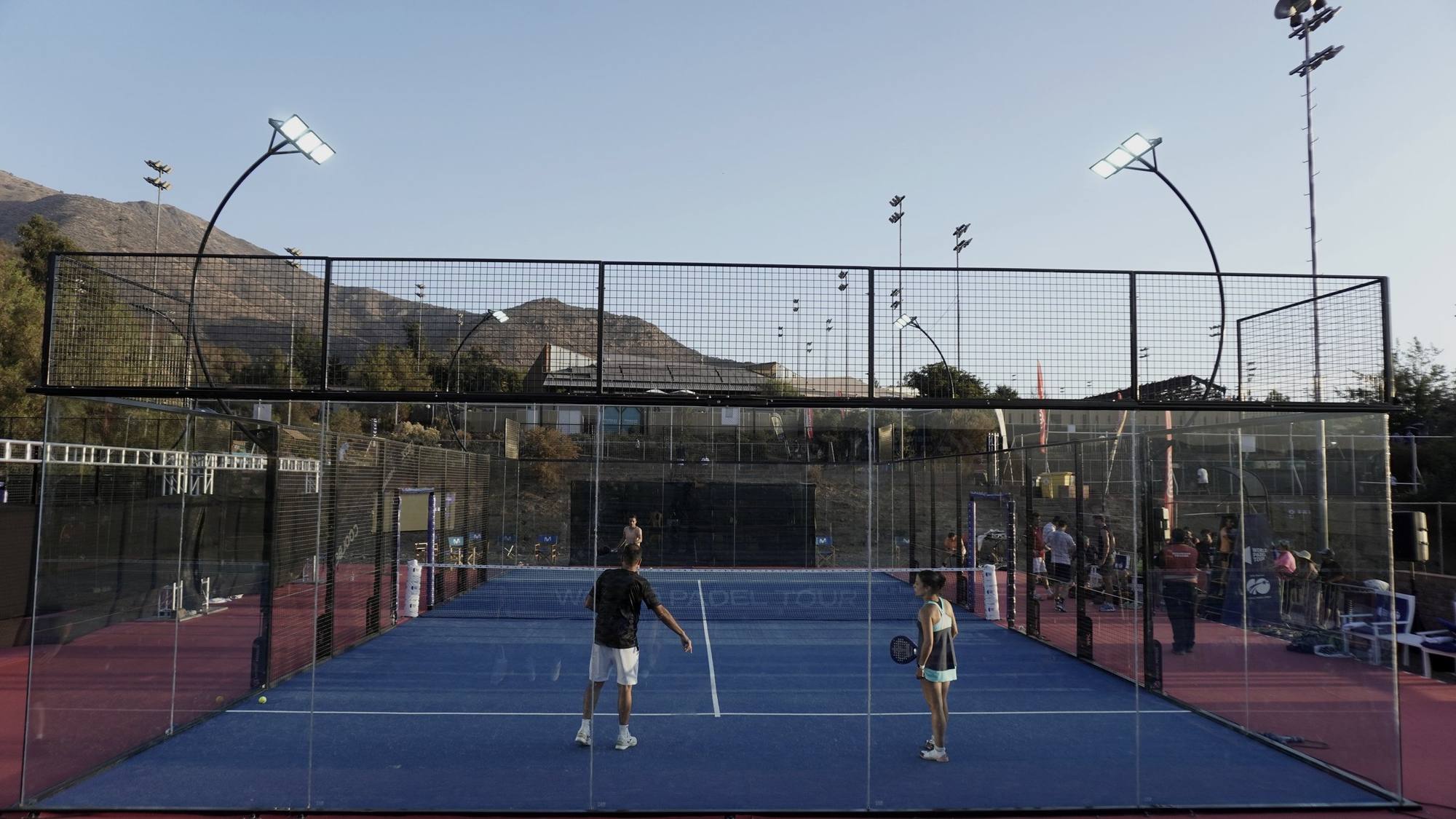
How to choose your padel court model: Full Vision, Panoramic and Elite Pro
We compare our padel court ranges so you can choose the right one for your project's use, audience and design.
Business
Is a padel court profitable? How to assess the business case
The sport's popularity alone does not make a padel court profitable. Location, occupancy, running costs and build quality decide the business case.
Guides
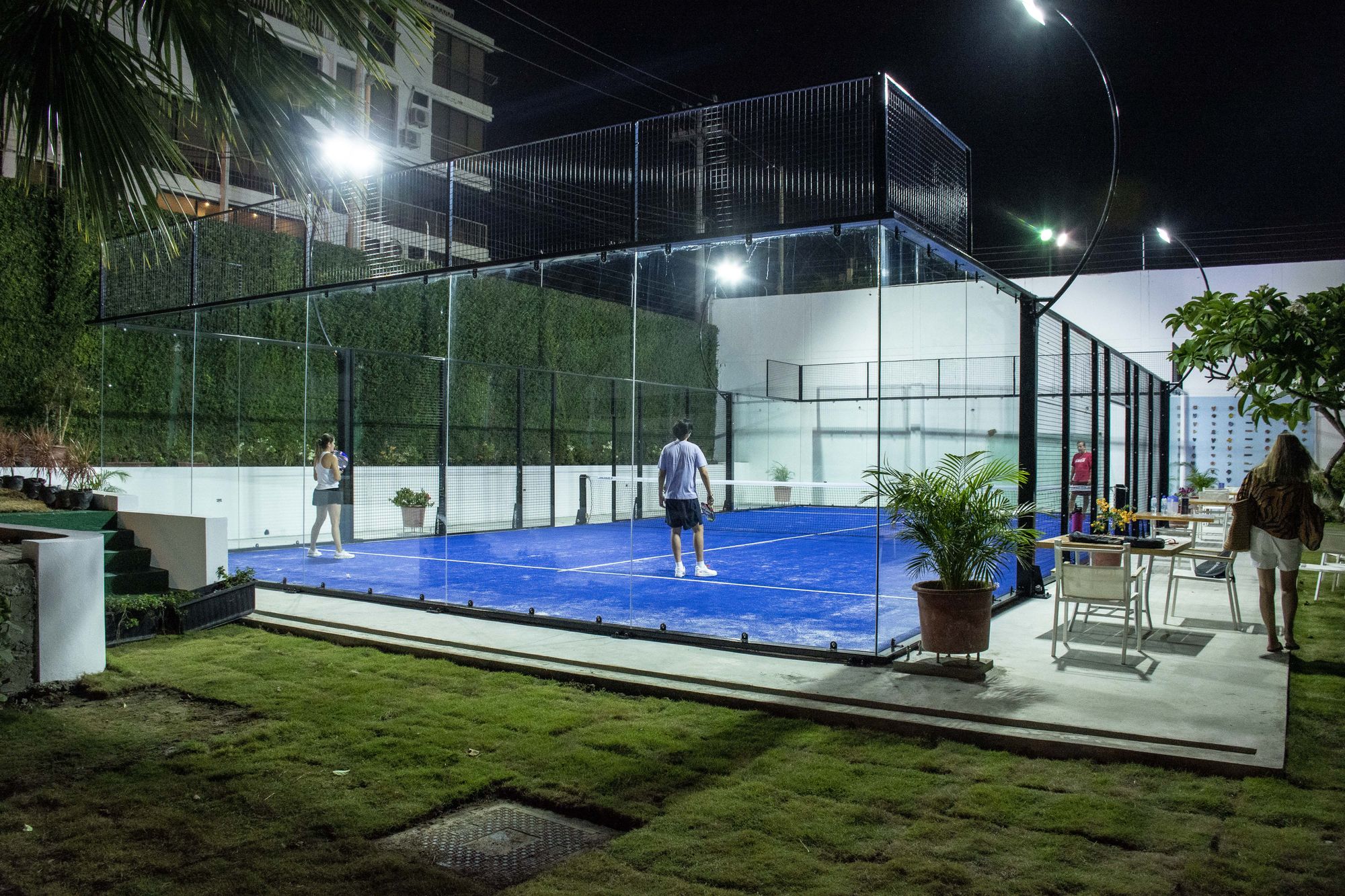
Padel court cost: the factors that determine the price
Why there is no single price for a padel court, which factors really move the figure and how to request quotes you can compare like for like.


